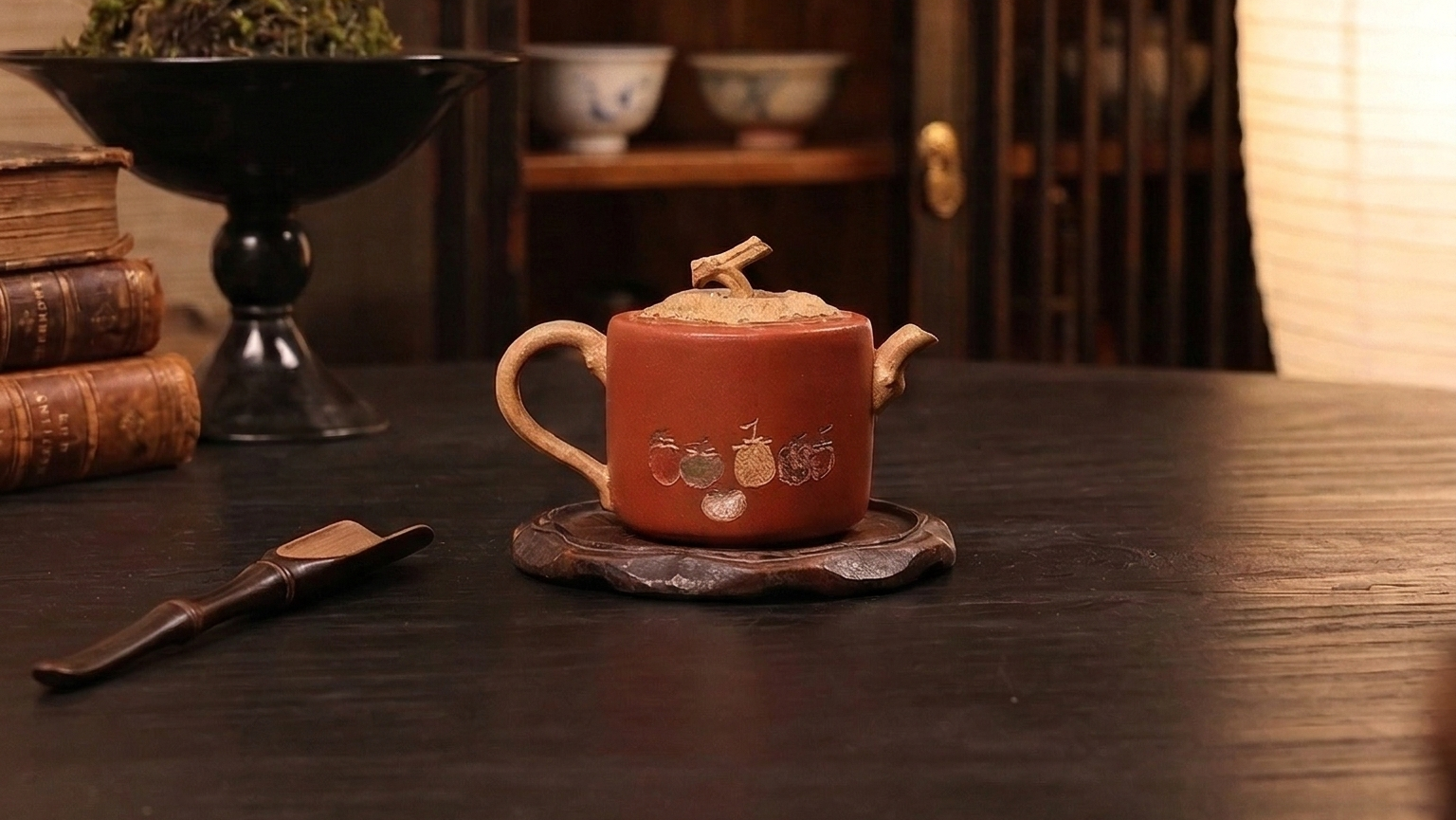
Across the expanse of historic epochs,
Throughout millennia, devotees have been engaged by the singular charm of Yixing Zisha urns. Originating from the province of Yixing in the eastern province, these containers are renowned for their exceptional beauty, limited clay, and innate ability to raise the note of tea. The earth's distinctive maroon hue, combined with the adept manufacture of environmental potters, creates artifacts that are and functional designs and esteemed properties. Securing a Zisha teapot is more than just such a purchase; it's embracing a rich historical heritage.
Comprehending Yixing Teapots: Origins, Categories, and Importance
The renowned Yixing teapots stand as a deep heritage deeply intertwined with Chinese culture. Deriving in the Yixing region of Jiangsu province, these clay vessels contain a heritage tracing back to the Ming Dynasty. Preliminary examples were functional, but amidst centuries, Yixing teapot fabrication evolved into an esteemed art form. The clay itself, known for its unique structure and ability to augment the flavor of the tea, stays a defining factor. Yixing teapots manifest in various forms, broadly categorized by shape: Conventional such as Zhuni (purple clay) and Bisheng, as well as specialized designs. The value of a Yixing teapot centers on several factors, including the potter’s distinction, the age of the piece, the rarity of the clay, and its aesthetic grace.- Chronology: Ancient times
- Composition: Assorted selections
- Cost Determinants: Uniqueness
Zisha Pot Excellence: Methods and Craftsmen
One crafting of a authentic Zisha teapot is a complicated process, requiring generations of experience. Veteran artisans meticulously extract the highest quality Zisha clay, a unique earth found only in specific regions of China. Longstanding techniques, often handed down through families, involve exacting shaping, sophisticated carving, and methodical firing in ancient furnaces. The end teapot isn't merely a receptacle; it's a testament to artistic vision and the weighty connection between the craftsman and their lineage. Each creation showcases the personal touch of the fabricator, resulting in a truly unparalleled work of art.
Ancient Pottery: Surveying the Abundant Inheritances of the Yixing Locality
This Yixing, established in Jiangsu the region, is broadly renowned for its exceptional earthenware – a tangible representation of centuries of Chinese creative legacy. These aren't merely vessels for making tea; they are intricate works of craft, often reflecting spiritual ideals. A unique purple clay, known as Zisha, possesses extraordinary qualities: Zisha Teapot the element dense, permeable, and imparts a subtle nuance to the tea.
- Several households have honed the techniques of Yixing teapot making, passing down preserved methods through times.
- Enthusiasts prize these pieces for their loveliness and rareness.
- Some jar tells a story, connecting the consumer to a rich lineage.
Considering Yixing Zisha: What to Look For
During analyzing procuring Yixing Zisha vessels, countless points involve careful consideration. To begin with, the substance's color is vital; authentic Zisha traditionally exhibits a unique rust-colored depth. Also, evaluate the artistry; clear aspects and a polished layer manifest skillful artistry. Ultimately, determine the craftsman's credentials; famous names draw boosted figures and often bestow a valuable dividend.
Zisha Pot Techniques for Tea Brewing
Infusing sumptuous tea with a Zisha jar is more surpassing a simple practice; it's an specialty. Zisha clay, noted for its unique natural composition, imparts a gentle character to the finalized tea that’s often gone with other pots. The correct water heat is essential; typically, lower than what's used for black tea, to protect the tea's essence and quality. Consider mindfully the tea class; delicate green teas or aged pu-erhs gain from the Zisha’s ability to mellow their natural edge. It’s imperative to condition the teapot preceding brewing, and to eschew over-steeping. Mastering this practice leads to a genuinely exceptional tea phenomenon.
- Realizing Zisha Clay
- Heat Intensity & Tea Selection
- Necessity of Preheating
Looking After Your Renowned Pot
For the purpose of ensure the persistence of your cherished Yixing vessel, ongoing management is critically necessary. Forgo using chemical cleaners; instead, softly immerse it with comfortably warm solution. Avoid sharp shifts; refrain lay the teapot directly onto a burning burner. Periodically, develop the kettle by brewing it with superior dark drink, as this promotes to enhance its essence and shields the singular essentials of the dirt.
Pertaining to Earthenware to Drinkware: The Journey of a Renowned Teapot
Such creation of a Zisha teapot is a remarkable procedure, a representation to both the planet's bounty and the skill of the craftsman. It inaugurates with the rigorous extraction of the unique clay from the mauve Zisha mines near Yixing. This untreated material, known for its exquisite features, is then methodically cleaned and molded for the foundational forming. The pot's configuration is professionally fashioned using a union of established wheel throwing processes, often incorporating fancy designs. Following settling, the jar undergoes a indispensable first firing, followed by a coating stage, which might involve several different layers of unprocessed Zisha slips. Finally, a second, and sometimes third, firing at extreme temperatures finishes the product, revealing its resolved beauty and exceptional characteristics - a authentic masterpiece, set to beautify a tea session.
{Yixing Teapots: A Symbol of Chinese Tradition and Respect
Esteemed Yixing teapots, originating from the prestigious Yixing region of Jiangsu province, are far more than mere ceramics for brewing infusions; they represent a profound aspect of Chinese customs. Made from distinctive purple clay – zisha – these remarkable teapots are highly coveted for their ability to boost the flavor of the tea and, crucially, for their charm. The past of Yixing teapot making spans centuries, and the mastery involved is handed down through generations, making each teapot a decorative item that embodies traditional techniques and a profound appreciation for the minimalist pleasures in life.